











Where it is usually about advanced self-learning AI models and slick dashboards, this blog is about two seemingly boring topics, namely: data management & data governance. No less exciting, because these topics are prerequisites for any data innovation your organization wants to deploy in production.
In this blog, I explain these topics in a straightforward way, share some pitfalls and go over why these topics are so important.
Finally, I reduce the 11 areas that make up data management and governance to the 5 most essentials and provide 4 concrete steps that your organization can get started with today.
Not the same
The terms data management and data governance are used inappropriately, incorrectly and interchangeably. This is annoying because they are a very important basis – and guide – for organizations that are serious about data.
Let’s just clear up one common misconception right away: data management & data governance are not the same thing! Data governance is an (important) part of data management. So they cannot exist without each other. I explain the differences further on.
Can we do without data management and governance?
After years of talking about the value hidden in data, now is the time where many organizations are actually taking steps and moving from “experimentation” to “production” with their data initiatives. It’s great that more and more organizations want to use data within improving – or even reinventing – their services and operations. Unfortunately, I also see that the challenges associated with this move are not yet known to everyone. As are the solutions, for that matter.
To really use data successfully within organizations, a good approach to managing your data is necessary. That sounds logical, but a solution to that problem is not so obvious, as research by Gartner also shows:
“Through 2025, 80% of organizations seeking to scale digital business will fail because they do not take a modern approach to data and analytics governance.”
That these are topics you may have heard of but have not yet come into contact with will be temporary, almost all data experts predict. More intensive use of data & increasing laws and regulations surrounding the processing of data will irrevocably lead to the need for more control over this data. My colleague Laurens Frijters also wrote about this development in his blog regarding the 5 most important Data & Analytics trends of 2023.
Many large and global data parties are launching new products & services to better control data management -and governance. One such party is Microsoft with its relatively new service called ‘Microsoft Purview‘ that makes data management and especially data governance applicable within an organization. For example, there is a new functionality that allows you to model your model your own organizational structure and link it to all your (technical) data sources, making it all a lot more concrete for the users of your data:
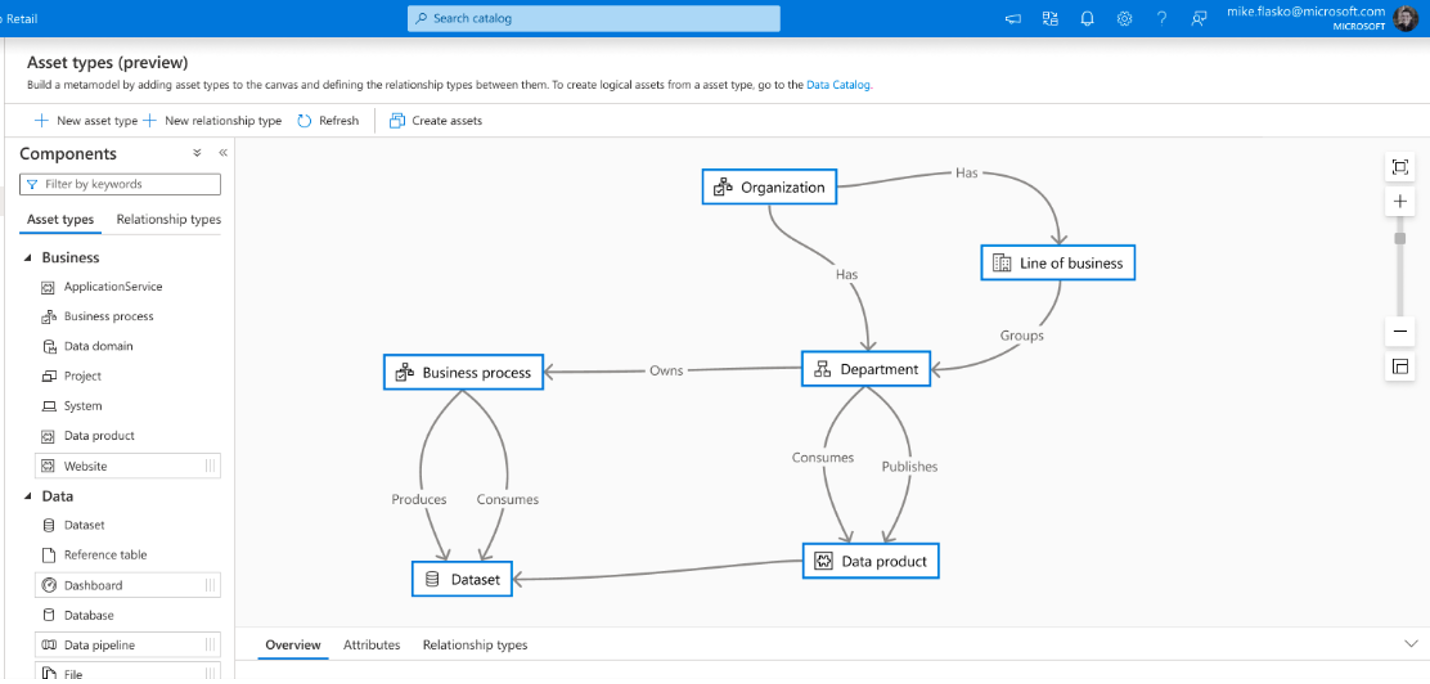
Many of these solutions start by scanning all of your data within your organization so you know what information you all have and need to get under control. Or as Peter Drucker said:
“If you can’t measure it, you can’t manage it”
Peter Drucker
Simpler, please?
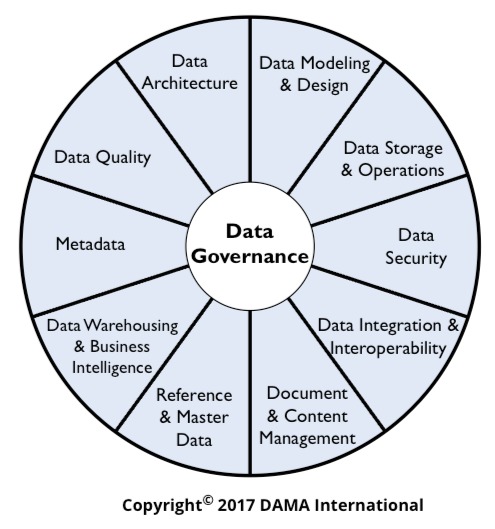
Below I try to explain the complex topics of data management and data governance in a simple way. In fact, there are already numerous – often international – articles & frameworks on the Internet explaining these topics in great detail. A good example of this is the DMBOK framework from DAMA International, in which data management is broken down into 11 areas, also called disciplines.
Furthermore, a – unfortunately withdrawn – ‘knowledge wheel data governance’ specifically for the Dutch governmentthe Data Governance Institute (DGI) model, and various models ‘devised’ by service providers such as e.g. Gartner and KPMG. The DMBOK framework is most widely used within and outside the Netherlands.
So we see that even choosing between the models that should make complex topics simpler is complex :-). Of course, each model has its advantages and disadvantages and when you ask the question which model is best you will probably get the typical consultant answer, “it depends”.
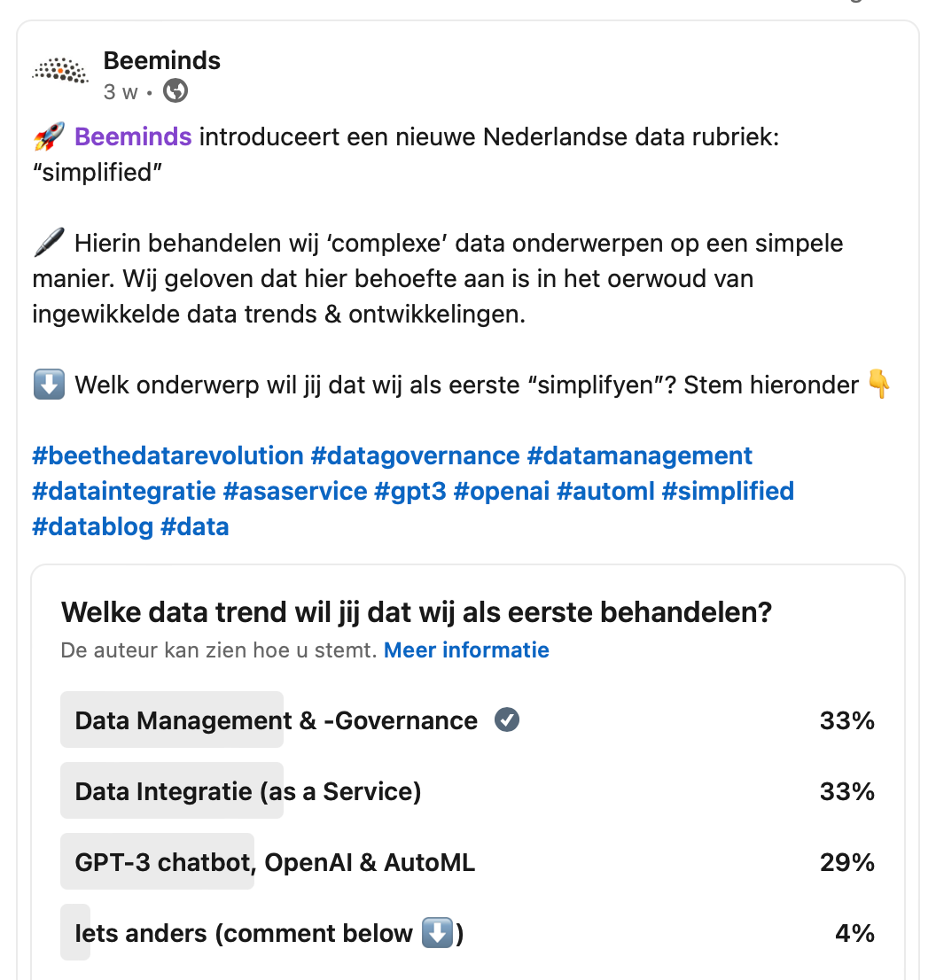
Nevertheless, there is a common denominator in all these models, which I will explain and simplify in the next chapter by going from 11 areas to 5. So you can use this overview for understanding and as a framework for further deepening. That there is a need for a simple overview and a simpler approach is something I often hear back from organizations and was also confirmed by you: this came up as number 1 when I asked the LinkedIn followers of Beeminds in a poll which subject we should simplify first.simplify ‘.
What is it and what are the differences & similarities
As I said, data management & data governance are not the same thing. Data governance is an (important) part of data management: namely, it deals with the arrangements around its implementation.
- Data management
is about managing all of your data: from collecting it, processing it, preparing it for use, to deleting it (if necessary). - Data governance
is about the goals, agreements, standards and processes you put in place to ensure that data management is done satisfactorily.
Unfortunately, many different definitions can be found on the Internet that also often contradict each other. I use this definition because it matches how many (Dutch) organizations view IT & data. You have technology that you use for a certain purpose (data management), but that technology in itself solves little if you do not make agreements about how you use it (data governance):
Data management is often about technology, while data governance is about the human side of using data structurally.
The main challenges
There are multiple reasons why data management and data governance implementations often fail, but there are also plenty of organizations I talk to that don’t see the value in data management and don’t even begin to pay attention. Often these are the environments where data initiatives don’t really take off and the capacity is fully utilized to manage it. You often see that by focusing on and investing in data management and data governance, the effort required to launch a new dashboard, for example, is many times lower because things like data quality and adoption are structurally arranged within your departments and processes.
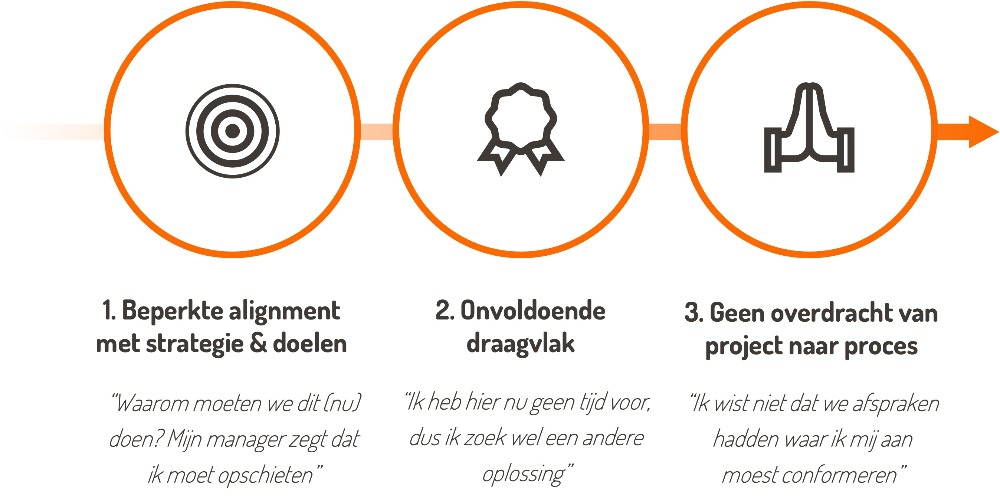
When the value of data management does get seen, these are the three main reasons I often hear back from organizations why data management initiatives often don’t get off to a good start anyway:
- Limited alignment with strategy & goals organization
- Insufficient support within organization
(lack of sponsorship) - No transfer from project to active process
Scrum in your data management implementation
One consequence of the above challenges is that data management initiatives often fail to deliver sufficient value to an organization. So this is not because of missing or poor technology, but rather because of the approach taken. Therefore, I am a strong advocate that data management implementations conform to the Agile/Scrum mindset are carried out:
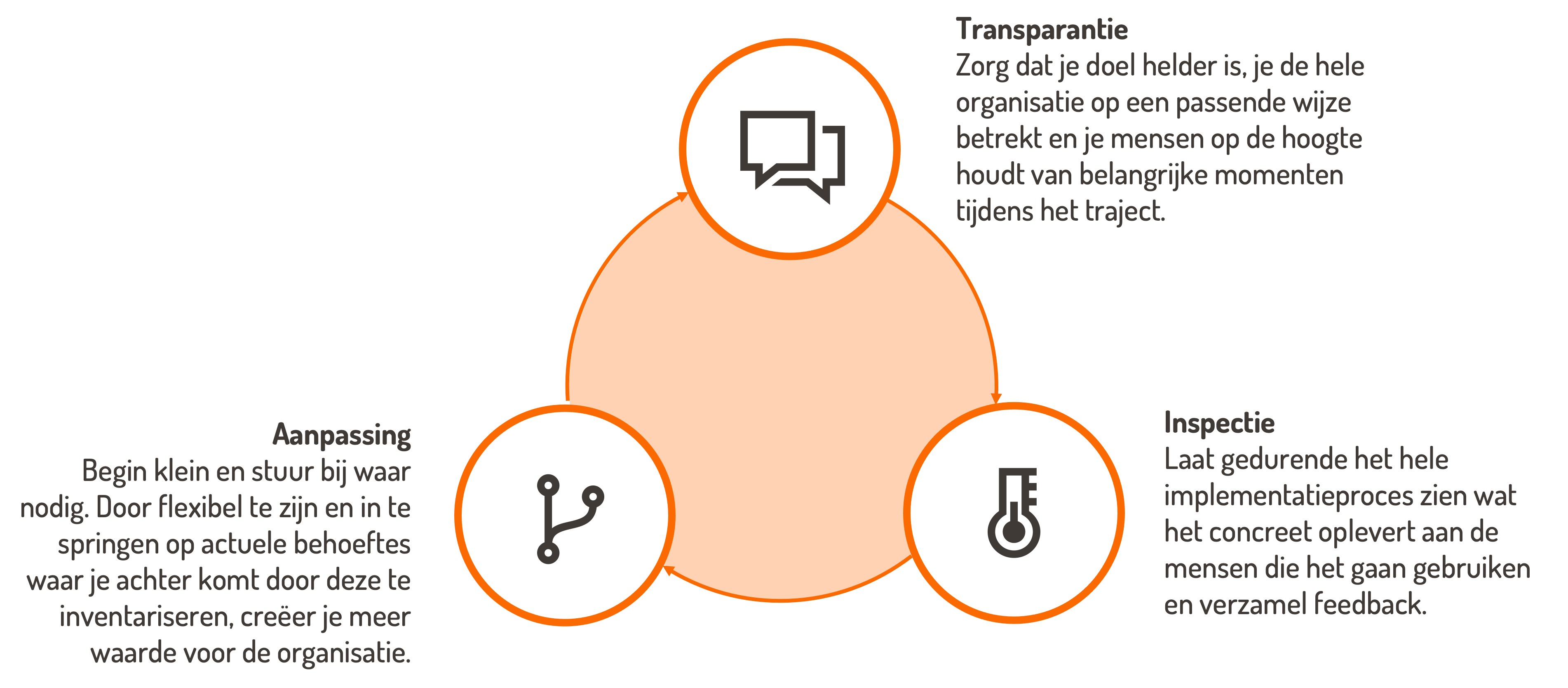
By continuously including these three pillars during your implementation, you will see that implementing data management & governance becomes a lot more tangible. In one of my next blog, I will explain how you can make data management concrete by properly deploying data management tools and make data governance live within organizations.
From 11 complex domains to 5 steps
As you have read, there are quite a few things to consider if you want to properly set up data management and data governance to support your data initiatives. To make this a bit simpler, we reduce the 11 domains of the aforementioned DMBOK model to 5 areas that are really crucial for Dutch companies:
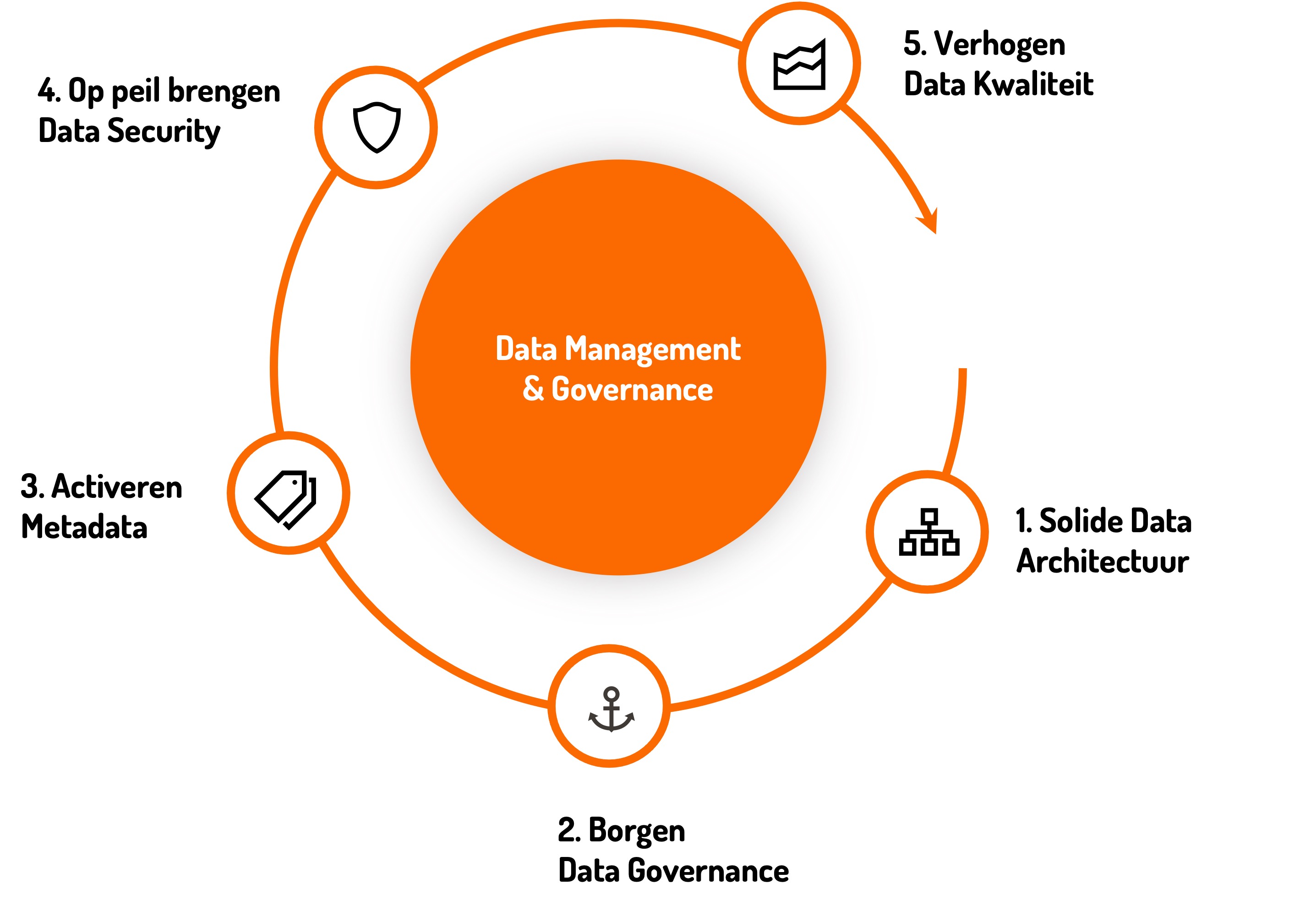
You can read more about each step below, by clicking on it:
1. Creating a solid Data Architecture (for which you need Data Modeling & Design).
There is nothing more important than creating a solid data architecture. By architecture, I don’t mean infrastructure. I mean properly setting up how your data goes from raw data to consumable information. An important part of that is having a unified data model. Create a clear “map” of your organization and make sure this map is easily readable by all your data users. Your architecture and data model can be so robust, but if the end products or maintenance is too complex, you will miss the mark.
2. Establish adopted data governance approach
Make sure you have data governance set up in accordance with agile/scrum thinking and it is supported by a sponsor within your organization. Having an approved governance elaboration is only the beginning: the challenge lies in taking responsibility within the organization for its implementation. Therefore, ensure within the departments that you have invested the necessary roles (e.g., data stewardship).
3. Make sure to activate and properly manage your metadata (that makes for manageable and transparent data)
Metadata Describes all the data present within your organization. In other words, the properties of your data. This makes the creation of a data catalog with which employees within your organization can find their way around all your data sources, reports and dashboards suddenly becomes feasible. Also things like data lineage become easier to demonstrate where data comes from and how it has been modified. The latter in turn contributes to the following two topics: data compliancy and data quality.
4. Addressing data security (which amounts to compliancy)
With ever-increasing regulation, this is no longer an optional topic for many organizations. In addition to the AVG/GDPR, increasingly, specific laws and regulations within your own sector are mandating necessary additional measures. Consider, for example, the Baseline Information Security Government (BIO) within the government.
Make sure that access to your data is controlled in a secure way and check regularly if permissions are granted. In addition, ensure active security monitoring and classification of the data itself for sensitive data such as a BSN number or passport details. Once you know what information is in your environment, you can take more targeted measures to cover risks.
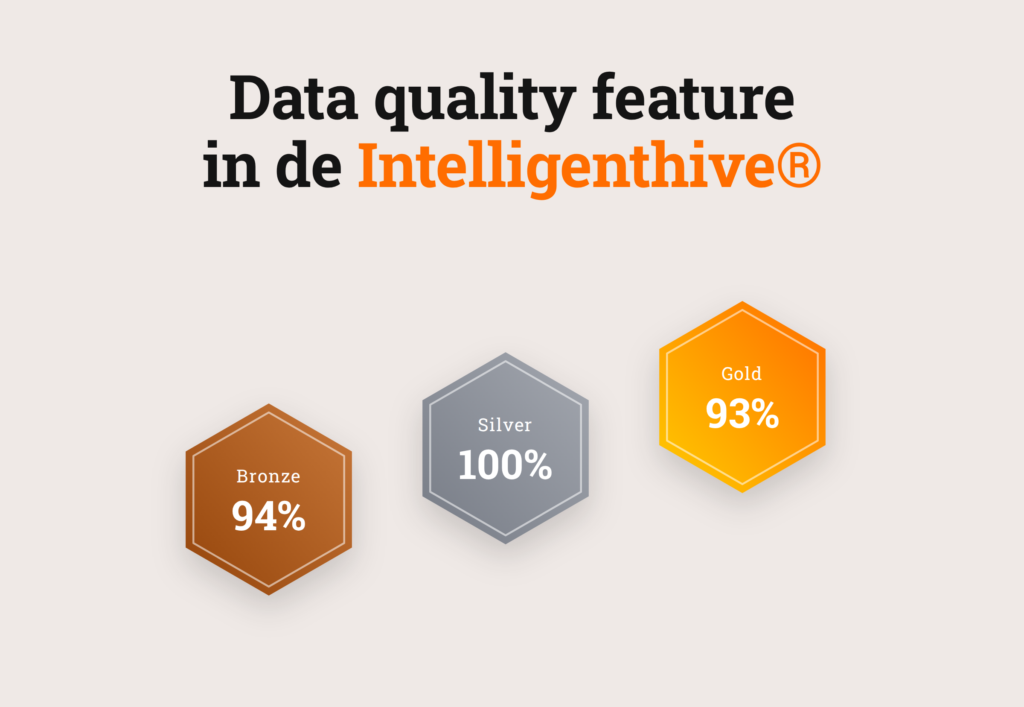
5. Increasing and securing data quality (where master data management helps)
Higher data quality contributes to the adoption of using data within your organization. Unreliable data is still seen as the reason why many data initiatives fail at many organizations.Master Data Management (MDM) helps to establish definitions that are important to your organization and its users. For example, what are the different revenue streams or the product types we want to report on? MDM tools are often expensive, but most of these organizations can get along just fine with a solution built in a low/no-code platform such as Microsoft PowerApps, for example.
Increasingly ‘commodity’ services, including within the data world
For the attentive reader, I have linked several aspects to a parent theme, because they should always be in the goal of this parent theme. The other points are certainly not unimportant, but increasingly fall into the “commodity” category, with which there are standard solutions available that suffice for 95% of Dutch organizations. Consider, for example:
- Data Storage & Operations solutions, including data platforms & data analytics environments, which are now easily and indefinitely scalable to be purchased in a cloud of your choice. This is a no-brainer for more and more organizations and there are numerous (managed) solution available that deliver an out-of-the-box data platform.
- Data Integrations are increasingly accessible – nowadays even as a service– and less complex through the use of no/low-code applications such as e.g. Power BI Dataflows with which ETL or ELT processes are much easier to maintain. These kinds of developments are becoming increasingly relevant for organizations as they use standard SaaS applications to support their primary processes such as Exact Online, AFAS, Salesforce, Dynamics 365, etc. instead of closed custom solutions.
- Document & Content Management: managing documents gets easier and easier once you use the right tools that increasingly live in the cloud these days. Think about Microsoft Purview in combination with Microsoft 365, a collaboration platform used by most organizations in the Netherlands.
Summary
I hope that in this blog I’ve managed to convince you on the one hand of the importance of data management and data governance, but at the same time I’ve also managed to give you some concrete tools to follow when your organization wants to get started with data management:
1. Determine if Data Management is relevant to your organization.
It depends on the maturity level of your organization. If you are only experimenting with data, then this is probably not relevant to you yet. Do you want to take the next step, or are you in the process of doing so and not succeeding? Then consider improvements in your data management and governance.
2. Ensure an implementation that is supported and aligned with your strategy
Ensure that key people within your organization are convinced of the usefulness and necessity of data management and data governance and ensure that they communicate transparently about it. Apply an agile/scrum methodology during the implementation so that you always focus on continuously delivering value for your organization and concrete results. Avoid the pitfall of colleagues coming up with detours to realize solutions faster because it is not clear what data management actually contributes.
3. Make a plan and get started on the 5 key areas of data management
Hold up the following 5 steps and work them into a plan that fits your organization and your goals:
- Setting up Data Architecture
- Securing Data Governance
- Manage your metadata
- Bring your data security up to par
- Increase your data quality
No expertise on Data Management and governance present in your organization? Let us advise, help and possibly even unburden you: that saves a lot of time and creates more & faster impact.
4. Continue to learn, gather feedback and improve.
It is a continuous process where you keep adjusting and testing whether the added value you are providing is still relevant to your organization.
share post