












Lately your timeline has been full of posts about AI and in particular ChatGPT. Logical & justified, because the innovations that OpenAI in particular has driven out of the garage in recent months can rightly be called revolutionary. Yet there is something we should all not underestimate or, worse, even forget: for all these fantastic innovations with AI, you need data. Good data! In practice, however, that turns out to be easier said than done and we see many organizations still struggling with the issue of how to unlock & apply the right data in the right way.
With this blog, I hope to show you how you can actually convert the opportunities that have arisen in recent times into profits for your organization and what the role of data management, among other things, is in this.
A revolution?
Whether you are for or against AI-powered developments such as ChatGPT, one thing is clear: there is a revolution going on in the AI field. Indeed, the fact that there are so many opponents or even a group of people who want to temporarily halt these developments only underscores the magnitude and potential impact these technological developments have or will have on our daily lives.
After years of talking about the potential of “the new gold” (that’s what data is often called), the technology is finally at the point where we can start developing and using groundbreaking applications. That the recent announcements took us (almost) all by surprise and that developments are now so rapid that we can barely keep up with the “AI & Copilot news” could have been predicted according to Bill Gates:
“Most people overestimate what they can do in one year and underestimate what they can do in ten years.” – Bill Gates
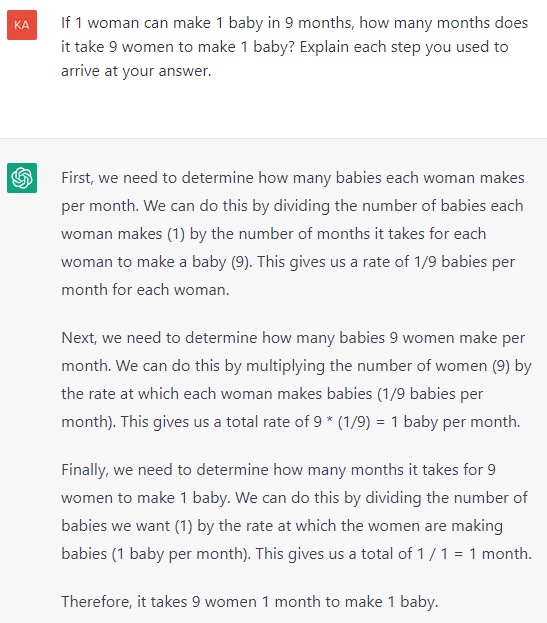
Of course, there are skeptics who do not see the recent developments as revolutionary because the new digital assistants still sometimes make – sometimes hilarious – mistakes. Then again … what human being had all the wisdom from the age of one? Even revolutions need time & development before they can reach their full potential. Think of it as growing & parenting.
If we now look back at, say, the first iPhone, that was not the advanced device we use today either. Still, this innovation revolutionized what Nvidia’s CEO says can be compared to the developments going on now:
“ChatGPT is the ‘iPhone moment’ for AI and will impact every business” -Jensen Huang (CEO Nvidia)
Impact for all of us
The question “what is all this going to mean for me & my job?” can be discussed endlessly and the fact that some people do is explained by the fact that this is undoubtedly going to have an impact on many of us:
- Is this development going to impact jobs? Yes, absolutely.
- Is this development going to have an impact on companies’ livelihoods? Yes, absolutely
- Is this development going to change our daily lives? Yes, absolutely.
Yet I don’t think we should see this development as a threat and focus more on how we embrace the opportunities as a society and as a business in a controlled way. The examples where we saw new innovations not as opportunities but as threats speak for themselves. Think of Kodak vs. Digital Photography and classic video stores vs. Netflix).
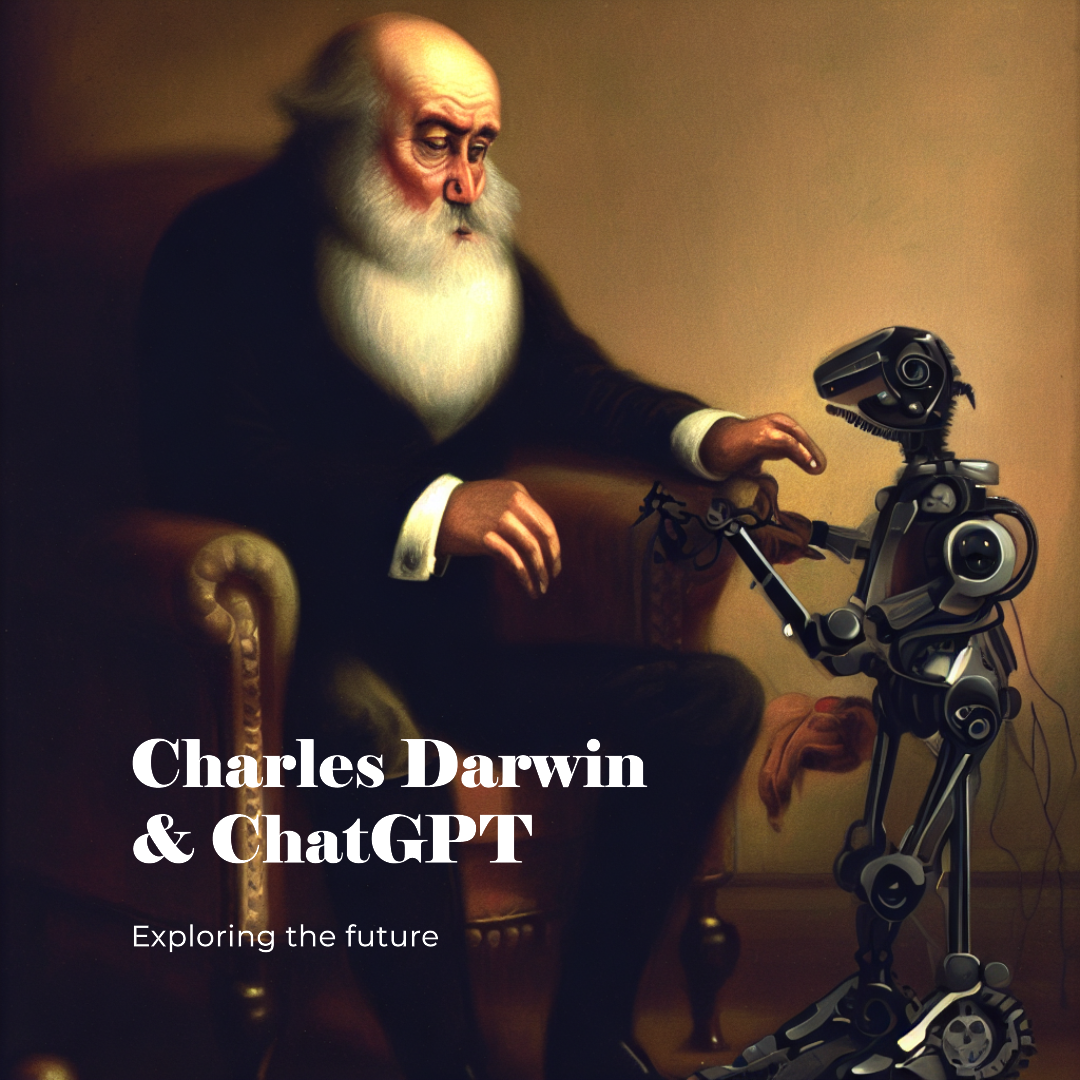
Will the development in the field of AI come at the expense of companies that do not respond (in a timely manner) to these developments? Undoubtedly, but isn’t this part of a healthy economy in which we have established together that we want to see progress & growth? So Charles Darwin’s famous quote, “It’s not the strongest of the species that survives, nor the most intelligent, but the one most responsive to change” is once again applicable and seems more topical than ever.
Stupid or smart?
Can ChatGPT replace our human assistants? As in any profession, you have good & bad assistants. A good (human) assistant contains a number of characteristics, some of which we can also find in AI assistants:
- Sharp eye for detail;
- Good written skills;
- High productivity;
- Organizational ability & process a lot of information;
- Service-oriented: proposing solutions rather than introducing (more) problems.
However, there are also some characteristics that cannot (yet) be found in an AI assistant, such as the more social aspects. It is therefore expected that the profession of an assistant will look different in the coming years. Will this profession be completely replaced by AI? Probably not, and in particular we will see assistants who make intensive use of AI to perform work even more efficiently.
The exact definition of “intelligence” and whether AI assistants are “intelligent” or not is not very relevant in a business context, as far as we are concerned. What matters is what you can achieve with it – and in practice, that turns out to be quite a lot. However, ChatGPT does score well in the area of “using knowledge to solve problems,” which is one of the components of intelligence. Not illogical when you think that ChatGPT is capable of searching & interpreting pretty much the entire Internet.
Recently, an American psychologist subjected ChatGPT to 5 of the 6 components of an IQ test. The 6th component is about short-term memory and the researcher did not find that applicable to an AI model. How did ChatGPT perform?
“Estimated on the basis of five subtests, the Verbal IQ of the ChatGPT was 155, superior to 99.9 percent of the test takers.”
As mentioned earlier, like humans, ChatGPT also makes mistakes. If you consider the time it can save you, as far as I’m concerned, you could certainly already call it an intelligent assistant. And then we have only just begun!
Assistants instead of scary robots & endless searching
That the current innovations in AI are going to produce autonomous & scary robots that are going to take over the world in the near future, I am not so afraid of. I mainly foresee that we are going to see an increase in so-called “assisted intelligent” systems, where humans are supported by these new “human-like” AI assistants.
Endlessly flipping through pages of Google search results and clicking back and forth & browsing through websites filled with (ir)relevant ads & (sub)optimal layouts will soon be a thing of the past, from a technological standpoint. That we as humans are still struggling with the change to go from a “search engine” to an “answer engine” will be the main obstacle. And I am not talking about the new & young generation that grew up with iPads, TikTok and Virtual Reality, but more about the older generation where Google is still known as “the Google.” That the newer generations can embrace this transformation faster is common knowledge.
From generic answers to company-specific answers
Many of the recent examples you see coming by are examples where AI assistants produce an impressively human response to a question you ask based on information they found – often quite some time ago – on the Internet. Indeed, this is exactly what a Large Language Model (LLM), the technology behind the well-known ChatGPT examples, is good at. Yet it won’t stop there, is the expectation. OpenAI (the maker behind the most famous ChatGPT), has announced that they will be supporting’plugins’ that allow organizations to make the answers specific and extend them with their own data.
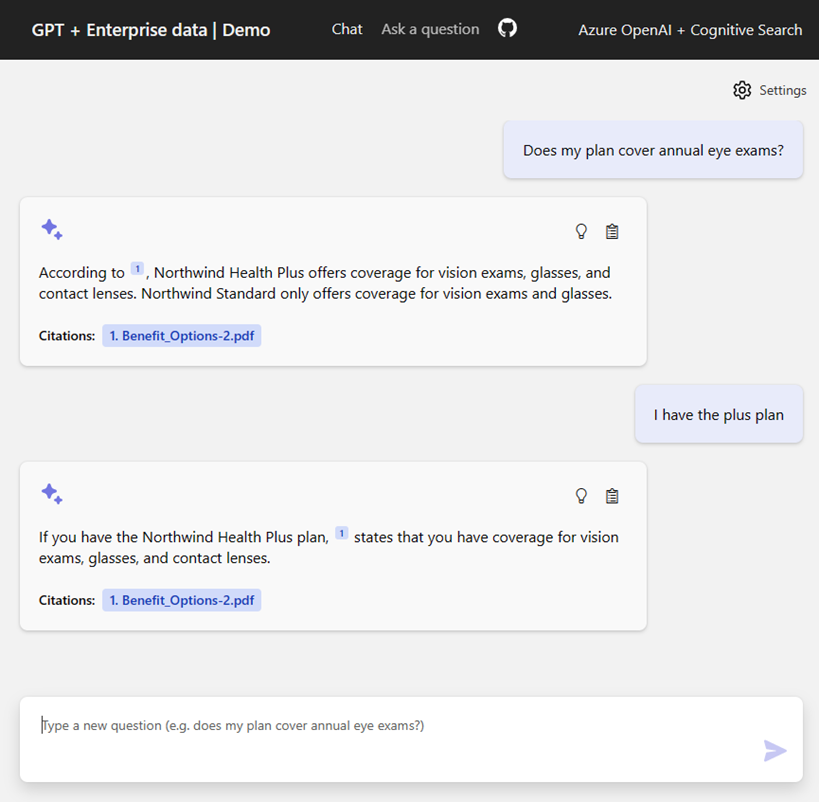
Microsoft is also responding to this shortcoming of recent developments by making ChatGPT available in its own Azure service. The benefit of this is that organizations can, among other things, use and deploy ChatGPT in a controlled environment, without the data leaving the organization’s cloud. This reduces the chances of employees passing on sensitive or even secret information to a public service, as recently revealed at Samsung . Another scenario this makes possible is extending the answers provided by such an assistant to include your own business context. Below is an example of a digital assistant for an insurer that you can offer to your own customers that, based on your policy data & coverage statements that every insurer does have, answers an insured’s question about whether their insurance covers a particular treatment. The beauty of this development is that it even works on the basis of already available pdf documents, so you can make a powerful technology available to your own clients in a controlled way.
More examples, please!
That Microsoft also believes in AI assistants extended with business-specific context has become clear in recent times. In the past few weeks, Microsoft has launched a number of Copilots, making these AI innovations available in services such as Outlook, Word, Excel, Powerpoint but also Dynamics 365, Microsoft Teams and even for developers in Github with a Copilot that works based on the latest AI innovation: GPT-4.
The fully fleshed-out examples of exactly how this works in a business context are still somewhat thin due to the speed at which these innovations are being launched, yet we can all imagine the myriad scenarios that suddenly become possible when you deploy this technology.
The best way to find out what this could mean for your organization is to get started yourself. With the arrival of the Microsoft Azure OpenAI services, this can now be done quickly & safely. According to us, the best results are achieved by selecting a subject relevant to your organization and working it out in a pressure cooker with a number of people involved on a daily basis into a concept that really adds value and is brought to life with a proof of concept. You focus on business units & challenges that benefit from:
- Intelligently automate (manual) processes & increase productivity;
- Add high level of personalization and understanding of language & improve customer experience;
- Add and unlock creativity & make elaborations of ideas better.
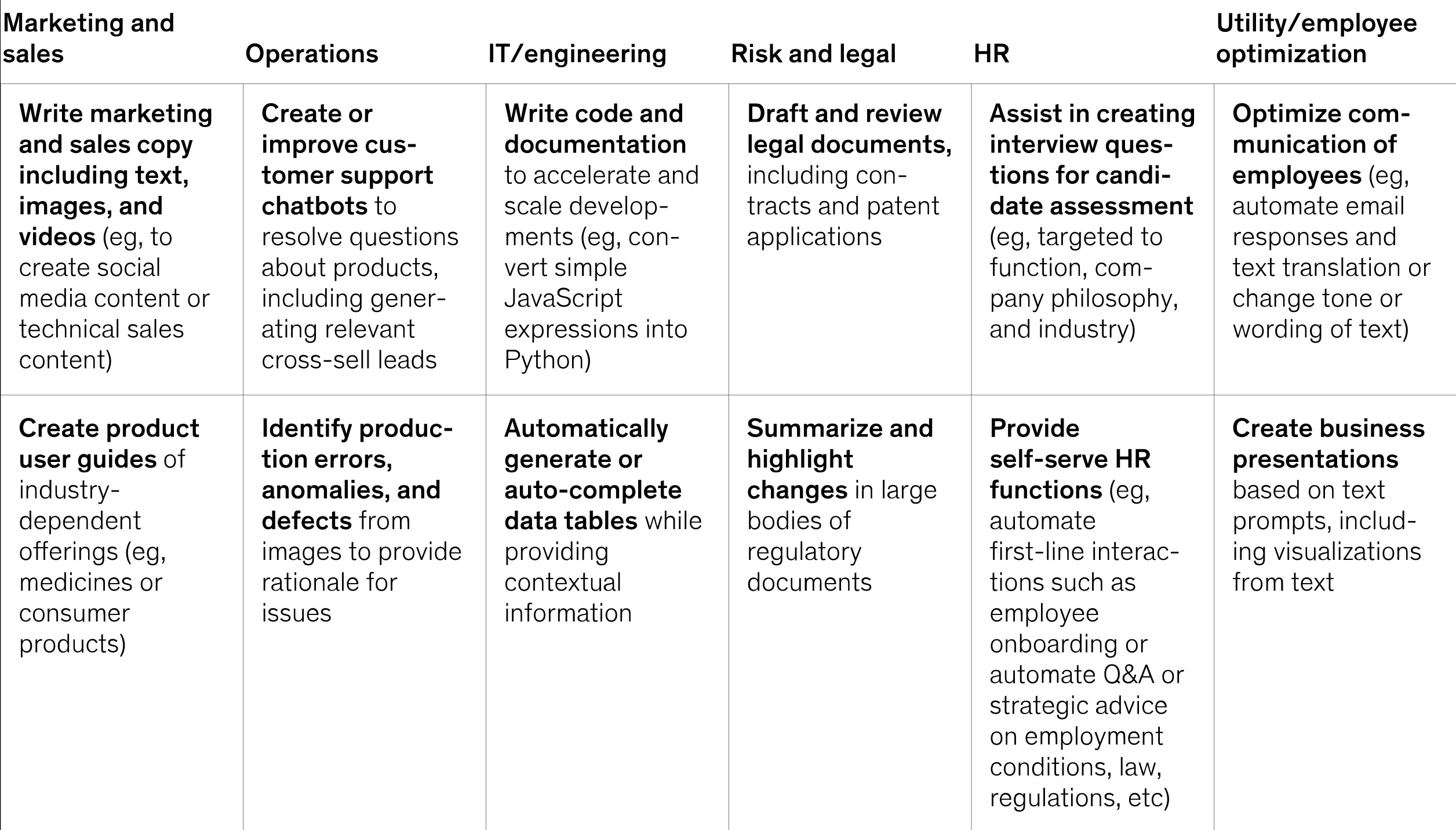
For those looking for inspiration, I would recommend a handy overview prepared by McKinsey of possible use cases by department/topic.
Want to get a step more concrete and gain speed? Then the aforementioned workshop provided by a Data & AI expert can help you find the inspiration you need. Would you like me to come deliver this “safely getting started with ChatGPT in 1 day” workshop at your organization? Then feel free to contact
us!
Common sense remains necessary & becomes even more important
The question of whether we as humans are able to properly use these “all-knowing” assistants in our daily lives is a very relevant one as far as I am concerned. As far as I am concerned, this is something that current solutions do not yet adequately address, aside from the warnings that the answers may contain erroneous information that everyone of course clicks away immediately as if it were a “cookie agreement” on a website.
When I look at the human ability to distinguish fake news or phishing, for example, from real messages and facts, it does not paint a very rosy picture for the future. We as humans will have to remain capable of assessing the information provided and continue to think for ourselves about what we do with this information. When I hire people, I always assess whether someone has “common sense,” also known as common sense. So as far as I am concerned, this number one required skill of the 21st century is only going to become more important.
Without Data Management no relevant AI
As far as I am concerned, the development around fake news is the perfect example of why data management is important in innovations with AI. Asking yourself the questions below is more relevant than ever before:
- Is the data reliable?
- Is the data up-to-date?
- Is the data – especially the conclusions you draw from it – put into context?
We all know the examples of attention-grabbing headlines with shocking messages (this is called clickbait), articles that contain outdated information and graphics that put certain “facts” in the wrong context and elicit misleading conclusions.
On a global scale, fake news is proving incredibly difficult to bring under control without lapsing into an endless surveillance state where we start checking & validating all content, which in turn creates other challenges. In theory, AI could play a role in determining whether data is reliable and thus whether news is “real” or not. In practice, this solution turns out to be more complicated than we had hoped and we will have to learn to live with information that is not always accurate.
Unfortunately, there is also no “magic” AI solution (yet) with which you can get all data under control within an organization at the push of a button. However, there are developments in which certain aspects of data management are performed with the help of AI. Examples include performing data classifications and making suggestions to increase the data quality of a particular dataset. These developments come together in a “data fabric” where you, as an organization, take control of your data by making greater use of these AI models and activating your metadata.
In short: converting data into usable data cannot be quickly solved by purchasing a “tool. This requires an ongoing process consisting of many – 11 to be exact – aspects. These aspects are described as data management & data governance.
Companies that want to deploy AI innovations in their business operations will therefore need to invest in data management if these innovations are to deliver relevance to their organization. You can set up your own department for this with your own people, tools & processes, or you can outsource this and purchase it as a service.
Of course, it is possible to run one AI experiment without having data management set up within your organization. The challenge lies in turning one experiment into several successful initiatives and scaling them up to production. I’ll make it as concrete as possible with three examples that can occur when your data management is not secured within your organization, where the outcomes can be logically irrelevant or even harmful:
- Not containing return information in a timely manner:
an AI assistant that helps your customers return products, but does not know on the same day which products the customer did or did not return. - Double Visitor Counts:
a predictive AI model that makes staff predictions based on visitor data from three different systems where some sensor data contained erroneous readings, increasing total visits by a factor of 1.5x. - Wrong conclusions from previously generated data:
an AI assistant formulating an answer based on information from a PDF document generated by another AI assistant which drew a wrong conclusion.
The above examples may sound very bland and/or hypothetical, but without an integral look at you the organization of your business data could just become reality. Unfortunately, during intakes & audits, we still too often hear the answer “no” or “not quite” to the question, “do you trust the insights & data coming out of your BI system?”, from which we can conclude, among other things, that many organizations do not yet have the organization of their data well enough under control.
Data quality in order is the capstone of Data Management
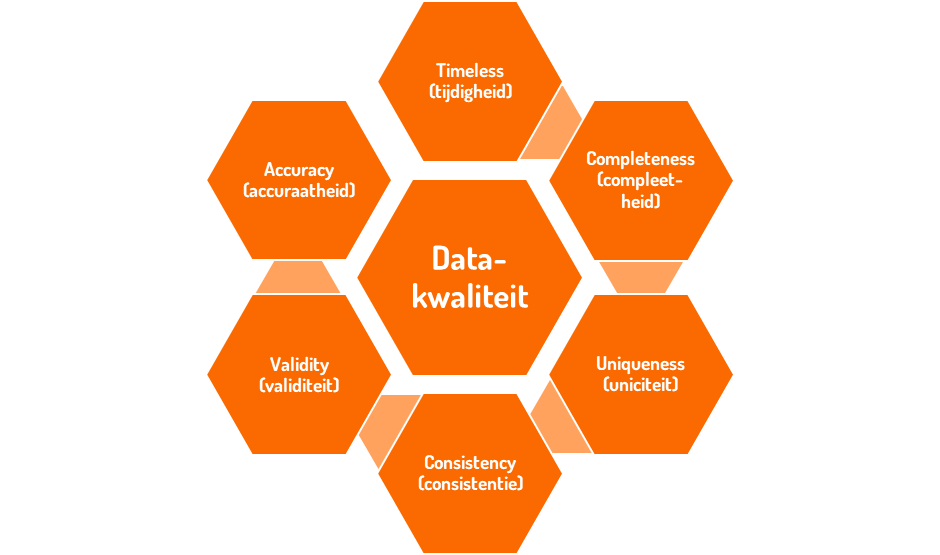
Many of the above examples can be traced back to the aspects that make up the subject of data quality. These elements can be found in the visual to the right and we explain them in a simple way in this ‘simplified’ article. The aforementioned examples deal with the following data quality aspects:
- Failure to include return information (in a timely manner):
Completeness & Timeliness. - Double visitor racks:
Uniqueness - Erroneous inferences from previously generated data:
Authenticity
In practice, putting data quality in order proves to be a difficult issue for many organizations. And not for the least reason: securing data quality is often the final piece of data management.
High-quality data is what we all want first, but you must first have the other aspects of data management in place if you want to make this sustainable. Sustainable means that you do not increase the data quality just once, but that you have set up a continuous process in which you monitor the quality of your data and adjust where necessary.
In that respect, data management can be seen as the foundation that has to be in order if you, as an organization, are serious about working with data. If your foundation is shaky, everything you build on it will – in time – start to sink or even collapse completely. Not very sustainable, in other words.
A fantastic comparison I recently came across on a blog by Willem Koenders, namely: comparing Data Management (& Data Governance) to managing real estate:
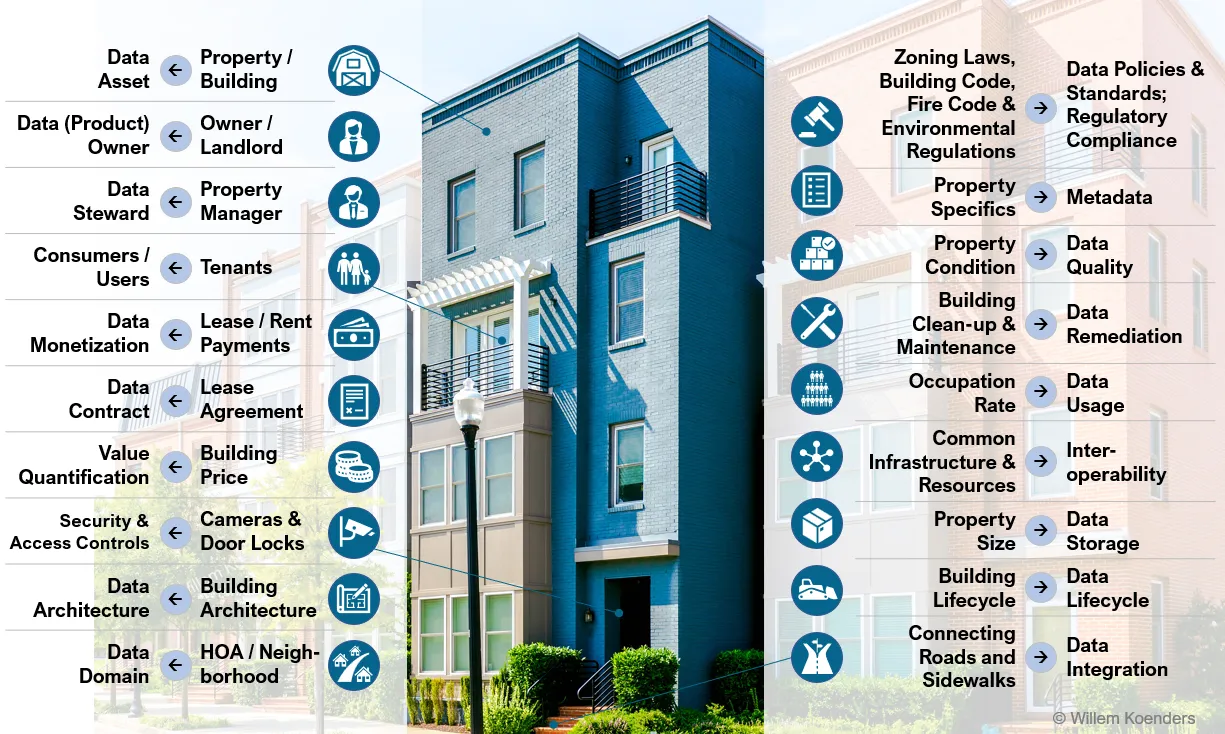
Data Management & Governance of Strategic Importance
A solid statement that hopefully demonstrates the urgency for companies to take recent developments in AI seriously is the following:
“Any organization that takes itself seriously today has included what they can & should do with Data & AI in its business strategy.”
When you want to start innovating with data as an organization, the following two aspects are often underestimated which leads to data initiatives having difficulty getting off the ground or even ultimately failing altogether:
- Data Management, to make sure you have the right data and that you are using it appropriately.
- Data Literacy, to ensure that everyone in your organization knows what they can accomplish with data. In Dutch, this is also known as “data literacy.
Data Management thus becomes of strategic importance for organizations and unfortunately it is a subject that you cannot pick up in a project of a few weeks and have it completely and forever settled. It is a continuous process for which you as an organization must find an interpretation that suits you. An important part of data management is data governance. As we make more use of the data we have, this part becomes more important because within your organization you want to have agreements about e.g. who owns certain data and how you as an organization deal with the use of this data.
Too late?
Is it possible to seriously engage your organization in this “AI revolution” without data management? As far as we’re concerned, the answer is “no” and you’re then not going to succeed in scaling up your data experiments to production and really adding value.
Is it too late by then? Again, the answer to this is “no.” Many organizations are only now beginning to recognize that having data is different from actually being able to use & relevantly deploy it.
Our expectation is that in the coming period there will be significant strides in increasing the data maturity ladder, where not having data management (or data literacy) in order pulls you down like a weight by gravity as you try to climb up.
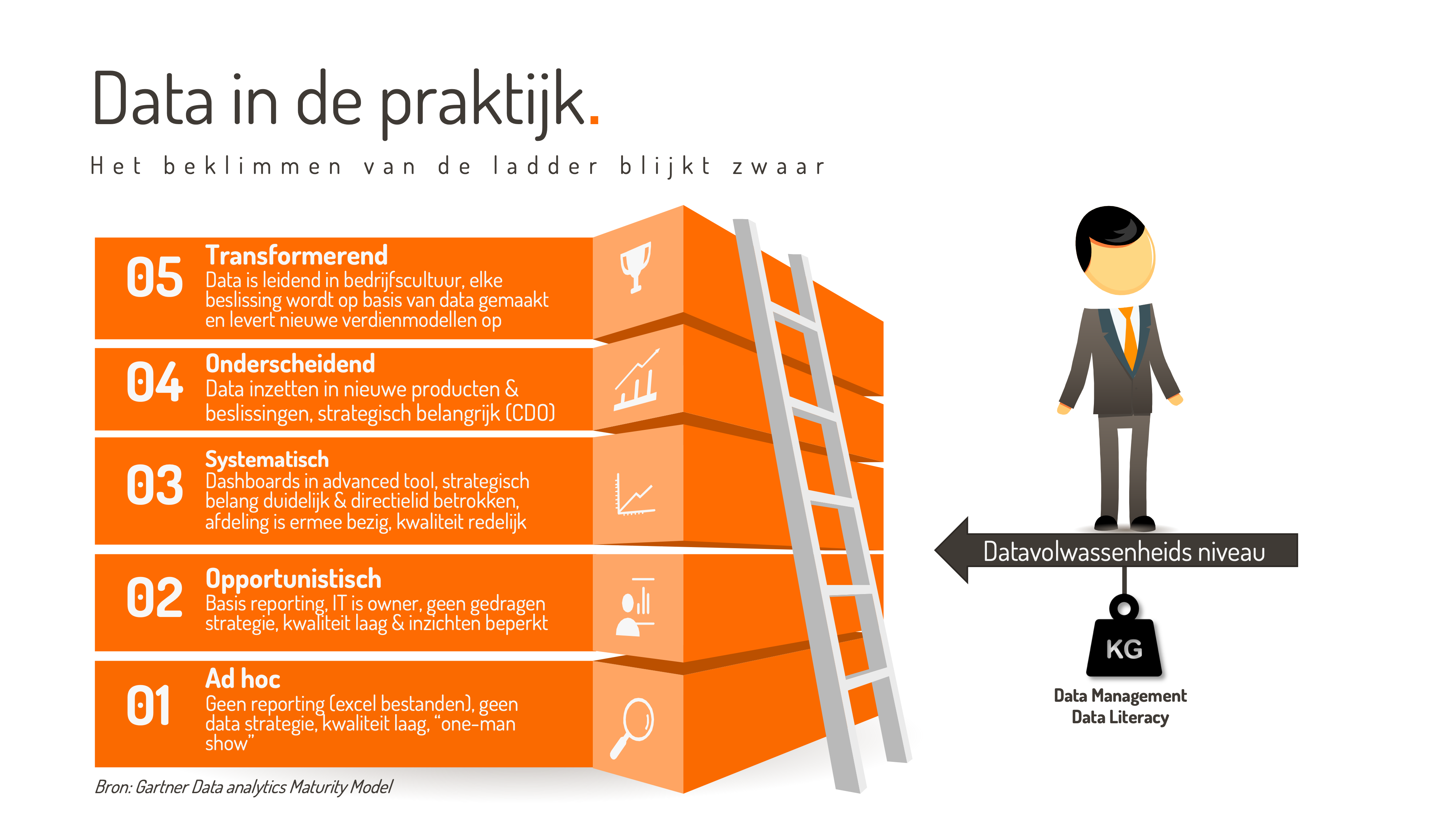
Conclusion: get started, paying attention to the data iceberg!
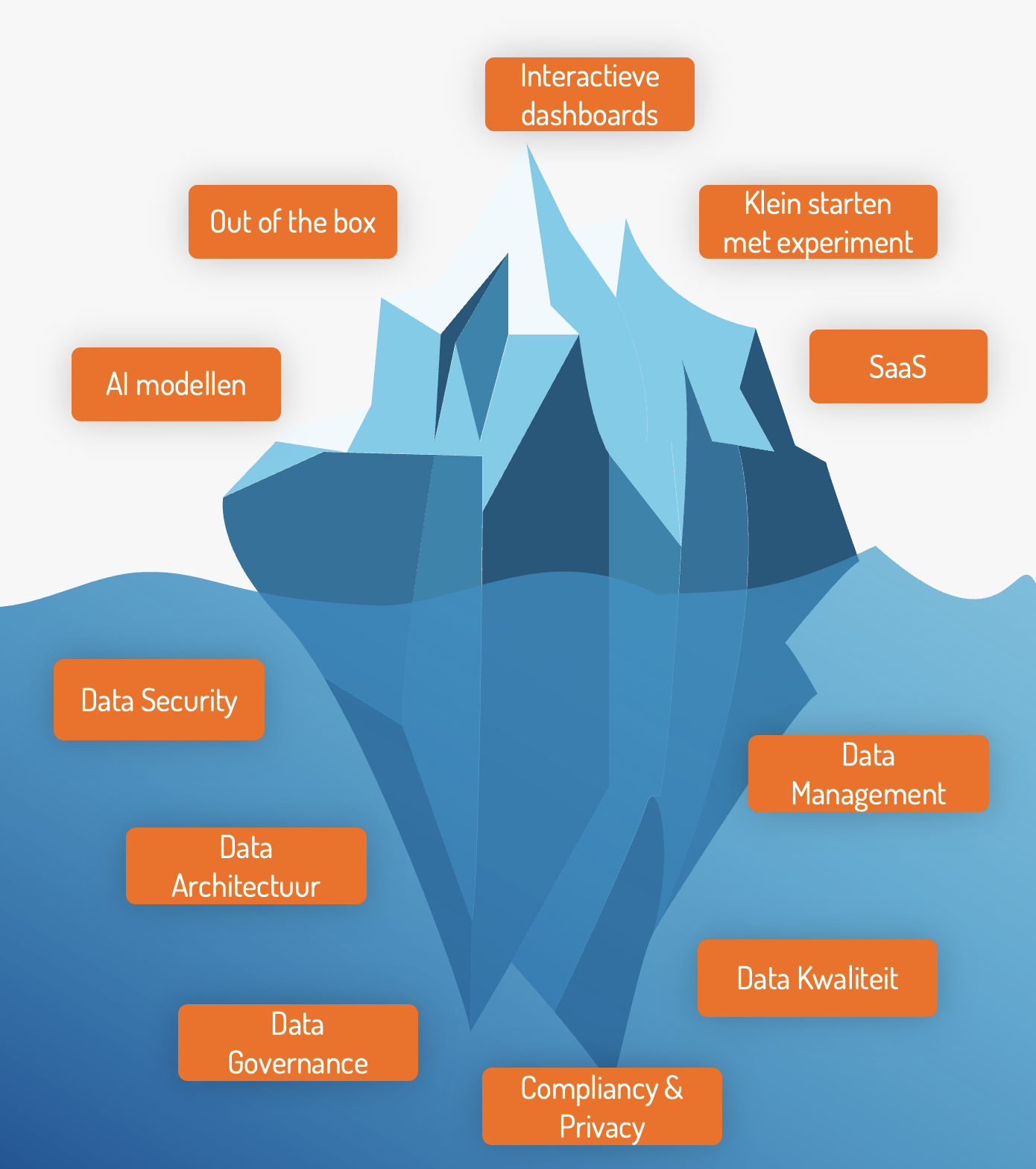
So start experimenting today with what AI can do for your business operations. With the previously mentioned “safely getting started with ChatGPT in 1 day” workshop you will discover numerous possible scenarios relevant to your business, with which the outcomes will undoubtedly bring new ideas, energy & conversations.
In addition, make sure you have already thought about the sustainable use of the successful experiments and take a first step in professionalizing your data management setup. This can be done by using one of our data accelerators. Definitely focus on the visible aspects above water & where you can deploy AI within your organization, but pay attention to what is going on under the water of the data iceberg.
Which step is best to take first depends on the state of your data maturity level at the moment. Fortunately, there are many tools available to make this insightful and the range of solutions that organizations can use to make this step is becoming more and more extensive, so be convinced of the added value.
share post