














AI does not fail, the foundation under it does
In fact, AI does exactly what it is supposed to do. It recognizes patterns, combines information and generates answers based on the input it receives. When that input is vague, incomplete or contradictory, the outcome simply cannot be better than the source.
Therefore, a fundamental truth often forgotten in AI projects applies: AI is only as smart as the data and context you give it.
In almost every Chat with your Data implementation, we see the same pattern. The technology works. The ambition is there. But the basics – data, context and structure – are inadequately set up. That leads to three recurring reasons why AI doesn’t deliver what organizations expect.
1. AI without context does not understand your business
You can compare an AI agent without context to a new employee on his first day at work. He has access to all the systems, sees numbers, tables and dashboards, but misses the story behind them.
What does a “customer” mean within your organization? Is it someone with a contract, an active user or simply a relationship in the CRM? When is something really profitable and what definitions are used? And more importantly: which data source is leading if figures contradict each other?
Without explicit answers to these kinds of questions, AI has to make its own meaning. It is going to interpret. And interpretation without context is basically guessing.
You can see this in the practice of AI-driven data analysis. The same question can yield different answers at different times. KPIs are interpreted differently than intended. The output sounds logical, but content is incorrect. Within Microsoft’s Chat with your data architecture, this is a familiar concern: without semantics, definitions and business context, AI delivers confusing rather than accelerated decisions.
Context, therefore, is not a luxury. It is the foundation on which reliable AI rests.
“Interpretation without context is basically gambling.”

2. A data model that humans understand, but AI does not
Even when the right intent and context are present, AI can only work with what it literally sees. And that’s where it often falters.
Many data models are designed for reporting and BI tools, not for AI. They contain cryptic column names, implicit relationships and assumptions known only to experienced analysts. For humans, this is often still interpretable. For AI, it’s not.
AI reads a data model literally. When relationships are not explicitly defined, when definitions are missing or when names are meaningless, AI cannot help but make incorrect assumptions. As a result, filters are misapplied, calculations are incorrect and insights prove inconsistent with each other.
Without a well-prepared data model, with clear relationships, descriptions and names, noise occurs. Not because AI fails, but because the model is never set up to be “read.”
3. Data is rarely AI-ready(and this is underestimated)
The biggest pitfall is perhaps the most obvious. Many organizations expect that AI can work directly on existing data. That data that has been used for years for dashboards, Excel analyses and reports is automatically suitable for AI. But that is a fallacy.
AI has different requirements. It needs clear structure, consistent definitions and explicit instructions. Also, AI works better within a defined and relevant domain than on a mountain of unstructured or broad datasets.
When data is not specially prepared for AI, you almost always see the same pattern emerge. Answers contain noise, insights contradict each other and users quickly lose confidence. Microsoft’s approach to Chat with your data makes this explicit: data must be simplified, enriched with context and provided with clear instructions before AI can work with it reliably.
“AI does not work with ‘all data.’ AI works with well-prepared data.”
From experiment to trusted colleague
A handy metaphor helps understand this difference. AI without context and structure behaves like an intern: smart, quick and eager to learn, but without an overview. The answers are interesting, but you dare not rely on them blindly.
In contrast, give AI clear definitions, a good data model and explicit context, and its behavior changes. The same technology suddenly feels like an experienced colleague. Not because AI has become magically smarter, but because the foundation is right.
How Beeminds addresses this with Intelligenthive®
At Beeminds, we see this pattern in almost every organization that starts working with AI and data. The solution is not in yet another AI tool or additional prompts, but in building a solid foundation.
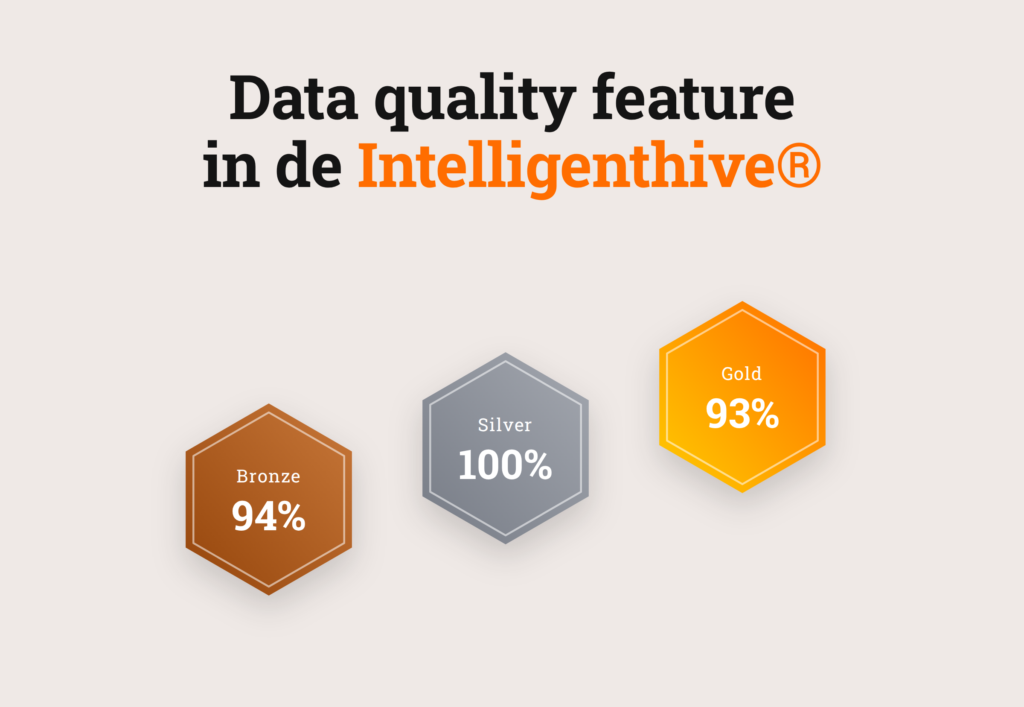
With the Intelligenthive®, we create a data foundation in which context, definitions and structure are central. An environment that is not only understandable for humans, but also readable for AI. This creates a situation where AI doesn’t just generate answers, but delivers insights you can steer on.
Chat With Your Data in a day Workshop
Célina will soon host the workshop “Chat With Your Data in a day.” Learn more and sign up here.
“AI does not fail. But without context, structure and preparation, it remains an experiment. Anyone who wants to get real value from Chat with your data, therefore, does not start with AI. Who starts with his data.”
share post