












Dataflow Gen2 for everything? That’s where the slowdown starts
For almost every task, Fabric gives you several tools that overlap. Dataflow Gen2 works fine for end users and light transformations, but it isn’t built for the heavy nightly loads from your ERP, WMS or other source systems. For those you need notebooks and pipelines. Pick the wrong tool on day one and you’ll pay for it later: in run time, in higher costs (Fabric bills your compute by the period) and in an environment where working together is a struggle.
You set up structure at the start, not afterwards
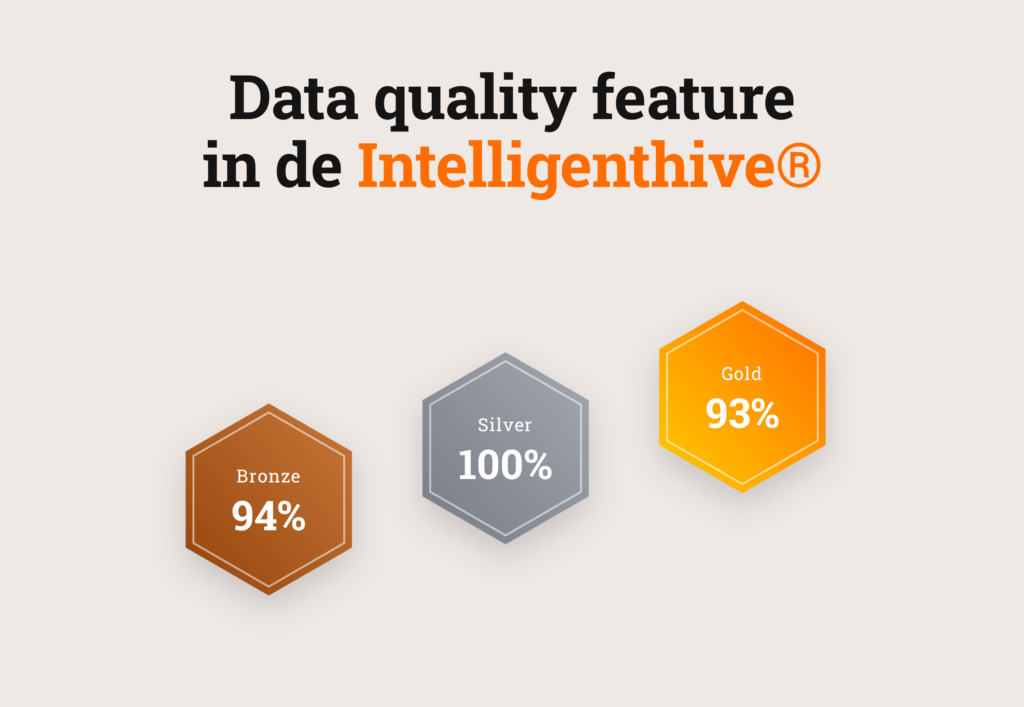
Fabric gives you complete freedom. Without structure up front, that freedom works against you. You need two things in place beforehand: a clear layout of your workspaces and a medallion architecture applied consistently. That medallion architecture is the layered setup from raw data (bronze) through cleaned data (silver) to ready-to-use data (gold). Without those two, sprawl sets in: datasets with unclear names, the same data in several places, permissions nobody can keep track of. Before you know it, the same mess is back in Fabric.
Every new source is more custom plumbing
There’s always another system coming: a new package, a new service, a new location. Build every connection by hand and you repeat the same steps each time: logging, error handling and incremental loading. That’s the work nobody sees, and it stacks up. You don’t break the pattern source by source, but at the foundation: one standard way to connect sources, so a new source becomes an onboarding step rather than a project.
Redesign before you move
Precisely because your old approach won’t carry over, the migration is the moment to redesign rather than copy blindly. Three questions help you on your way:
- Would you build it this way if you started again today?
- Which logic can go because no one uses it any more?
- Which reports are worth the move?
Answer these questions first and you take less with you, and keep a cleaner platform.
share post