










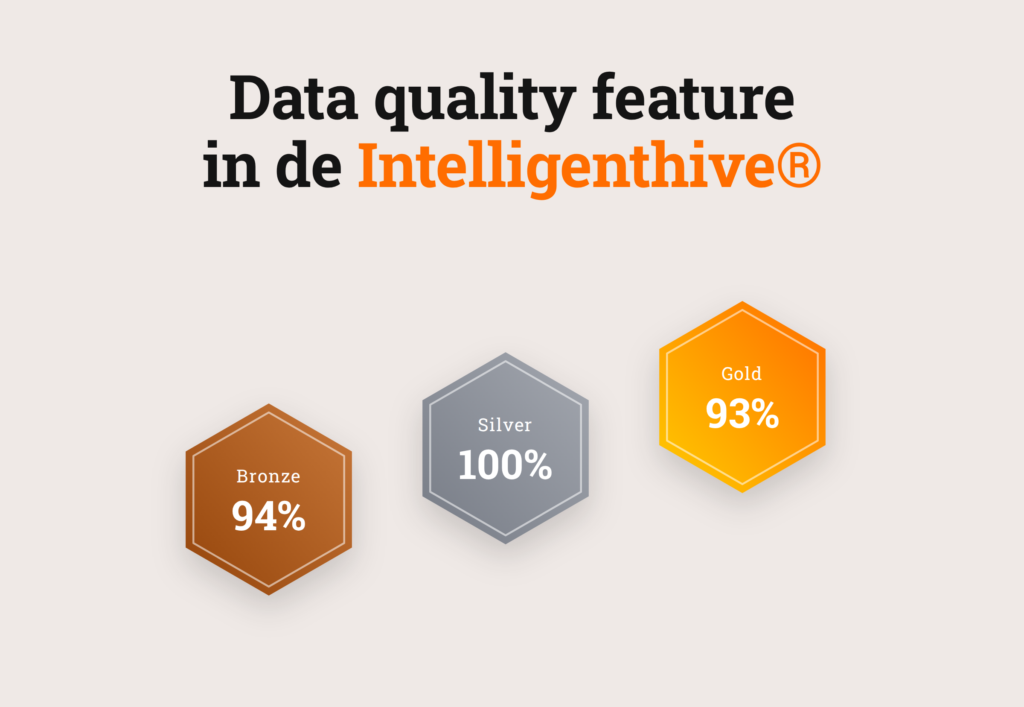
Poor data quality is a nuisance. Poor data quality that only surfaces in the CFO’s report is worse. At that point it is no longer a technical problem: decisions may have been based on incorrect figures, employees lose trust in reports, and data and IT teams scramble under time pressure to trace where it went wrong.
Reliable data doesn’t come from checking the final report alone, but from guarding quality throughout processing. That is why quality control is part of every step in the Intelligenthive®. With the Data Quality Rules feature you define, run and monitor rules in one place.
Quality rules in every layer and every environment
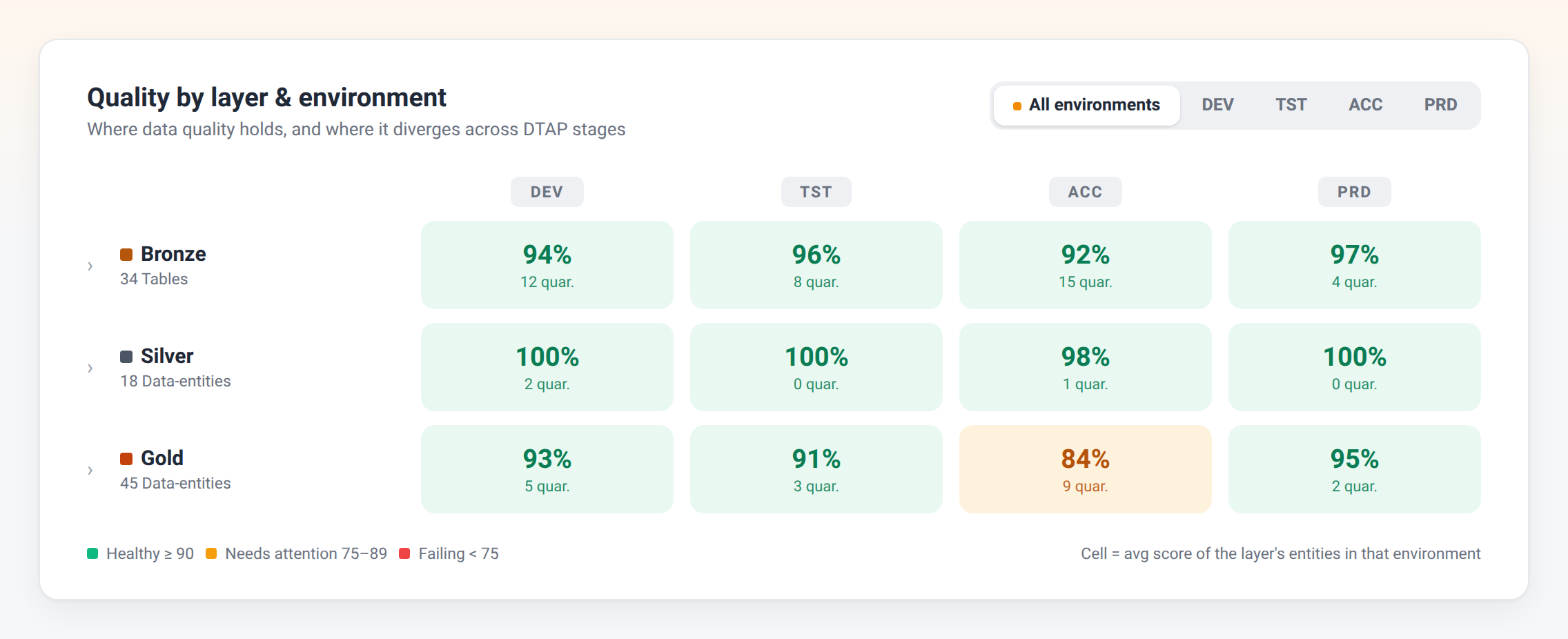
On the way from source to data product, data changes constantly, and every stage carries its own risks. In Bronze, for example, you check on ingestion whether required fields are present. In Silver, you validate formats, uniqueness and permitted values. In Gold, the business rules come in: they determine whether data is ready for reporting and analysis. In the Intelligenthive®, you apply rules across all three medallion layers.
The same goes for every environment: development, test, acceptance and production (DEV, TEST, ACC and PRD). You develop and test a check first, and only then promote it to production. That way, quality control grows along with the life cycle of your data solution.
From standard rules to AI suggestions
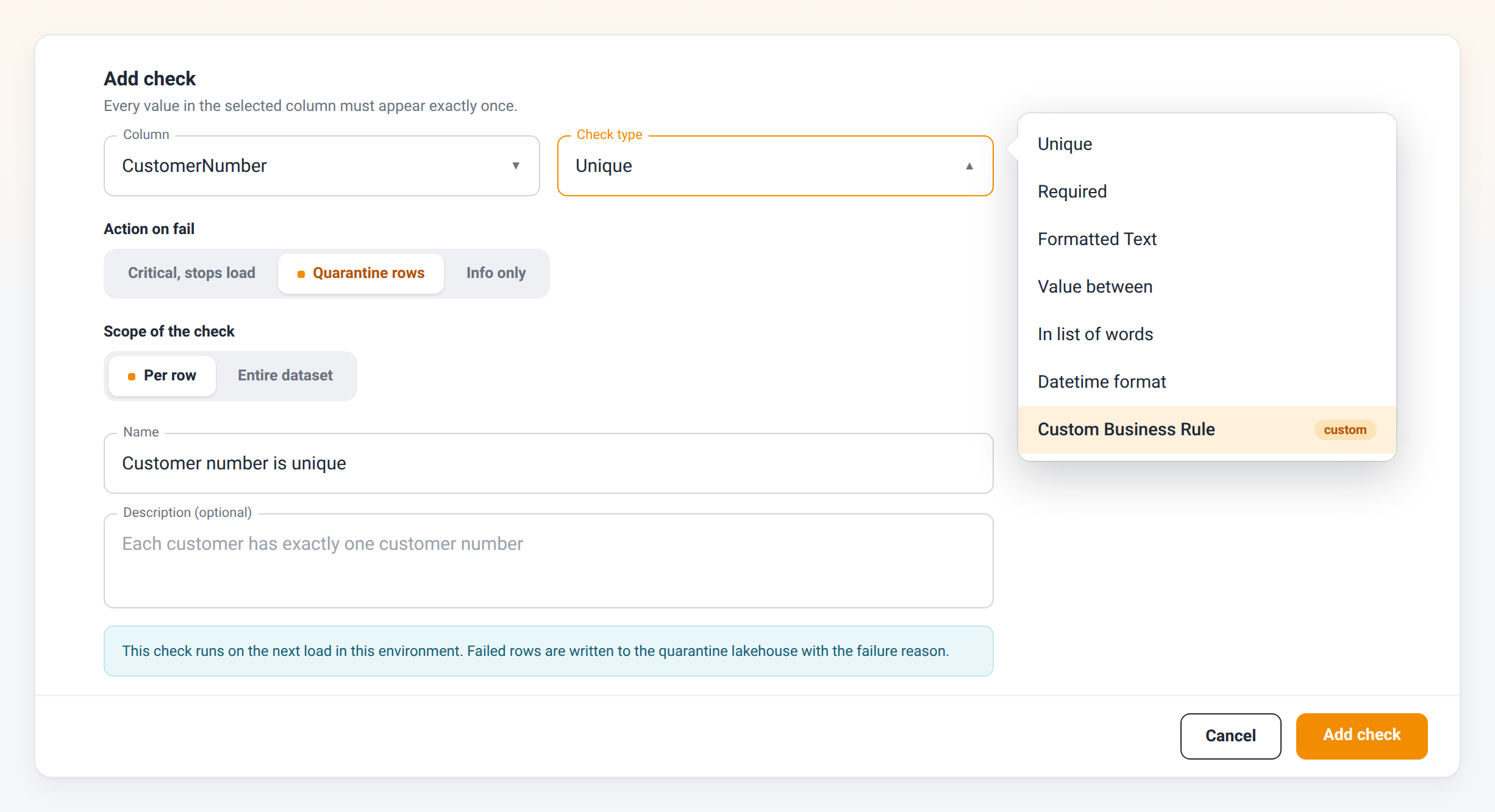
You don’t start from scratch. The Intelligenthive® uses an open-source data quality framework with over 250 built-in checks, ready to configure straight away. Does your organisation have a rule that doesn’t fit the standard set, something unique to a process, domain or data product? Then you simply add a custom check.
AI helps you draft rules: based on data profiles, it suggests fitting checks. You review and activate them, so you combine speed with control over what goes live.
Decide what happens when a check fails
A check only has value if its outcome has consequences, and not every deviation is equally serious. A missing mandatory order number calls for a different response than a value you merely want to keep an eye on. For each rule, you decide how the Intelligenthive® responds:
- stop processing
- quarantine the affected rows
- log the deviation for information only
You also choose the level at which a rule applies and when it runs. Unreliable data doesn’t slip through unnoticed, while a minor deviation doesn’t bring the whole process to a halt. Thanks to alerts and quarantine, data and IT teams can step in before users notice anything.
Always in view
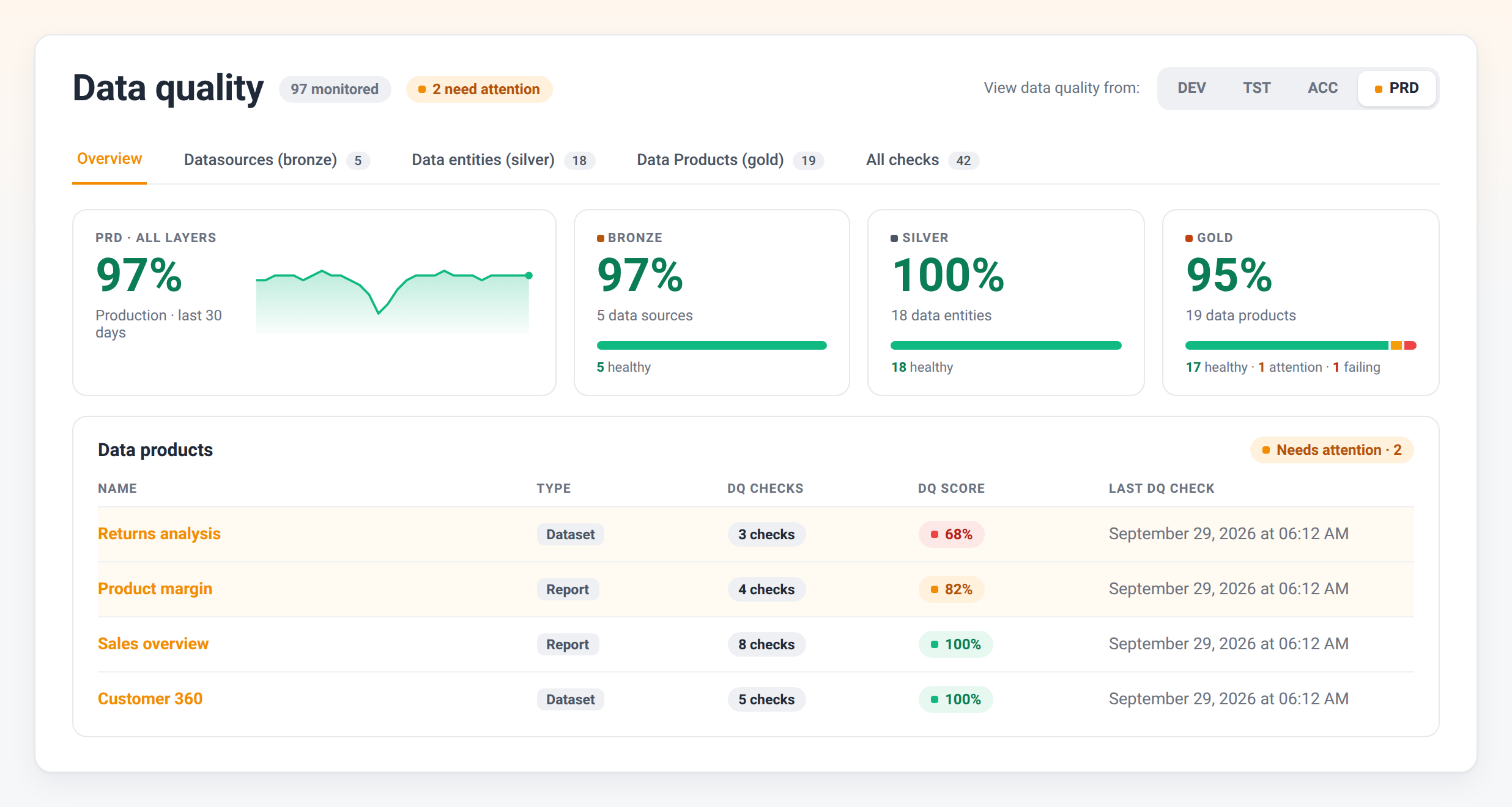
A dataset that passes every rule today can still cause problems tomorrow: a changed source, new input or adjusted business logic. Data quality is not a one-off clean-up. Through the DataOps dashboard, you track quality scores and trends per domain, environment and medallion layer. You see not only that something is going wrong, but where in the chain it starts.
In many organisations, rules, logging, alerts and monitoring are scattered across different tools, so nobody knows exactly which rules are active, or where. In the Intelligenthive®, it all sits together. Data engineers, data owners and everyone else involved look at the same picture.
Fix problems where they start
Good data quality doesn’t mean nothing ever goes wrong. It means deviations are caught early, handled appropriately and never reach users unnoticed. Bad data then no longer surfaces in the CFO’s report: it gets resolved where the problem begins.
Curious how the Intelligenthive® helps your organisation keep its data quality reliable, day after day? Get in touch for an introductory conversation.
share post