











Data management is the process of collecting, storing, managing and securing data. The purpose of data management is to ensure that the data used by an organization is consistent, accurate and easily accessible. It is also important to ensure that the data being collected is stored in a way that ensures it is secure from loss or damage.
According to a popular framework (DMBOK), Data Management consists of 11 sub-areas:
- Data Governance
- Data Architecture
- Data Modeling
- Data Quality
- Data Warehousing
- Data Integration
- Data Security
- Data Privacy
- Data Lifecycle Management
- Master Data Management
- Metadata Management
Data management is important because it helps increase an organization’s efficiency and ensure that important decisions can be made based on accurate data.
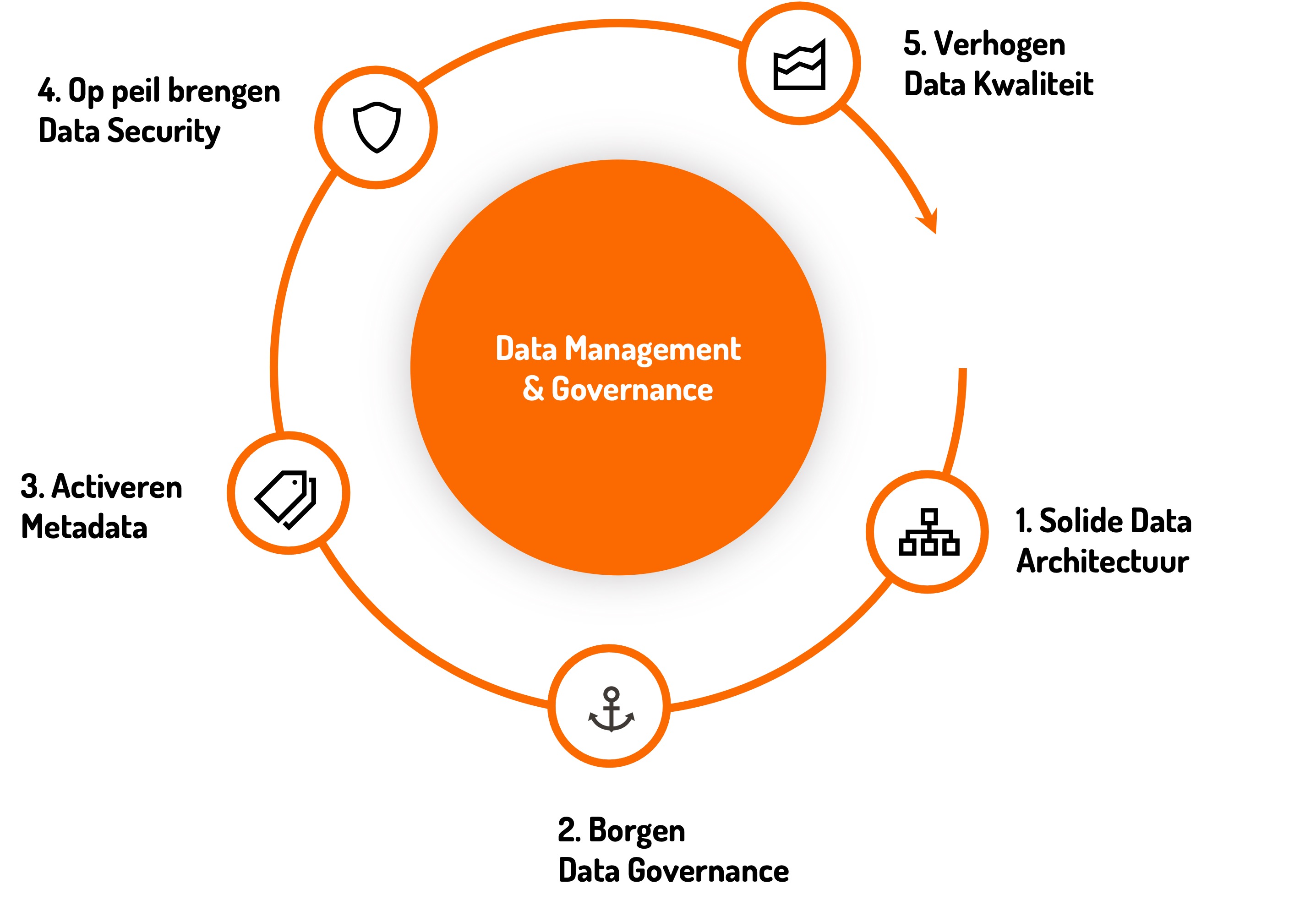
The 5 key components of Data Management
Our colleague Stefan Daelemans wrote a blog about The difference between Data Management and Data Governance and reduced the 11 components that normally make up Data Management to the 5 most important ones:
share post